
How Skool turns engagement into predictable, owned value instead of temporary reach. Borrowed attention never compounds, while communities outperform audiences. This article explains why attention is inherently unstable: views fluctuate, algorithms change, and what looks like growth today can collapse tomorrow. Most online businesses aren’t limited by traffic, they’re limited by structure. Join Skool and create your own community where engagement turns into long-term value...
How Skool turns engagement into predictable, owned value instead of temporary reach. Borrowed attention never compounds, while communities outperform audiences. This article explains why attention is inherently unstable: views fluctuate, algorithms change, and what looks like growth today can collapse tomorrow. Most online businesses aren’t limited by traffic, they’re limited by structure. Join Skool and create your own community where engagement turns into long-term value...




Audience vs Community: The Skool Business Model That Actually Compounds

Frank Arellano
Founder of Plexotrade LLCIf you rely on content to grow your business, there is one uncomfortable truth you must accept:
Attention is unstable.
Views fluctuate.
Algorithms change.
Platforms shift priorities.
What looks like growth today can collapse tomorrow.
Why Most Online Businesses Are Built on Sand?
Creators often mistake visibility for leverage. But visibility without ownership is fragile. It produces spikes, not systems.
The Real Problem: Attention Doesn’t Compound
Creators, coaches, and educators often believe their main challenge is:
- Getting more followers
- Getting more views
- Posting more content
In reality, the problem is structural, not tactical.
Most online businesses are built on platforms where:
- You don’t own the audience
- You can’t control communication
- You can’t predict income
You’re borrowing attention — not converting it into an asset.
This is what we call the Borrowed Attention Trap: reach grows, but leverage never does.
Why Reach Without Retention and Expansion Is a Dead End?
Attention only compounds when it is captured, retained, and owned. Platforms optimize for engagement, not for your long-term revenue stability.
The Skool Business Model That Actually Compounds
There is a fundamental difference between:
- An audience that watches
- A community that participates
Audiences consume.
Communities commit.
This distinction is what separates creators who stay stuck from those who build predictable revenue.
| Audience | Community |
| Consumes content | Participates and contributes |
| Algorithm-dependent | Access-controlled |
| Volatile reach | Stable engagement |
| One-to-many | Many-to-many |
| Low retention | Retention loops |
| Hard to monetize repeatedly | Recurring revenue by design |
This gap — between reach, retention, and expansion — is exactly what Skool was designed to fill.
Why Community Is a Business Model, Not a Feature?
What Skool Actually Is (Without Buzzwords)
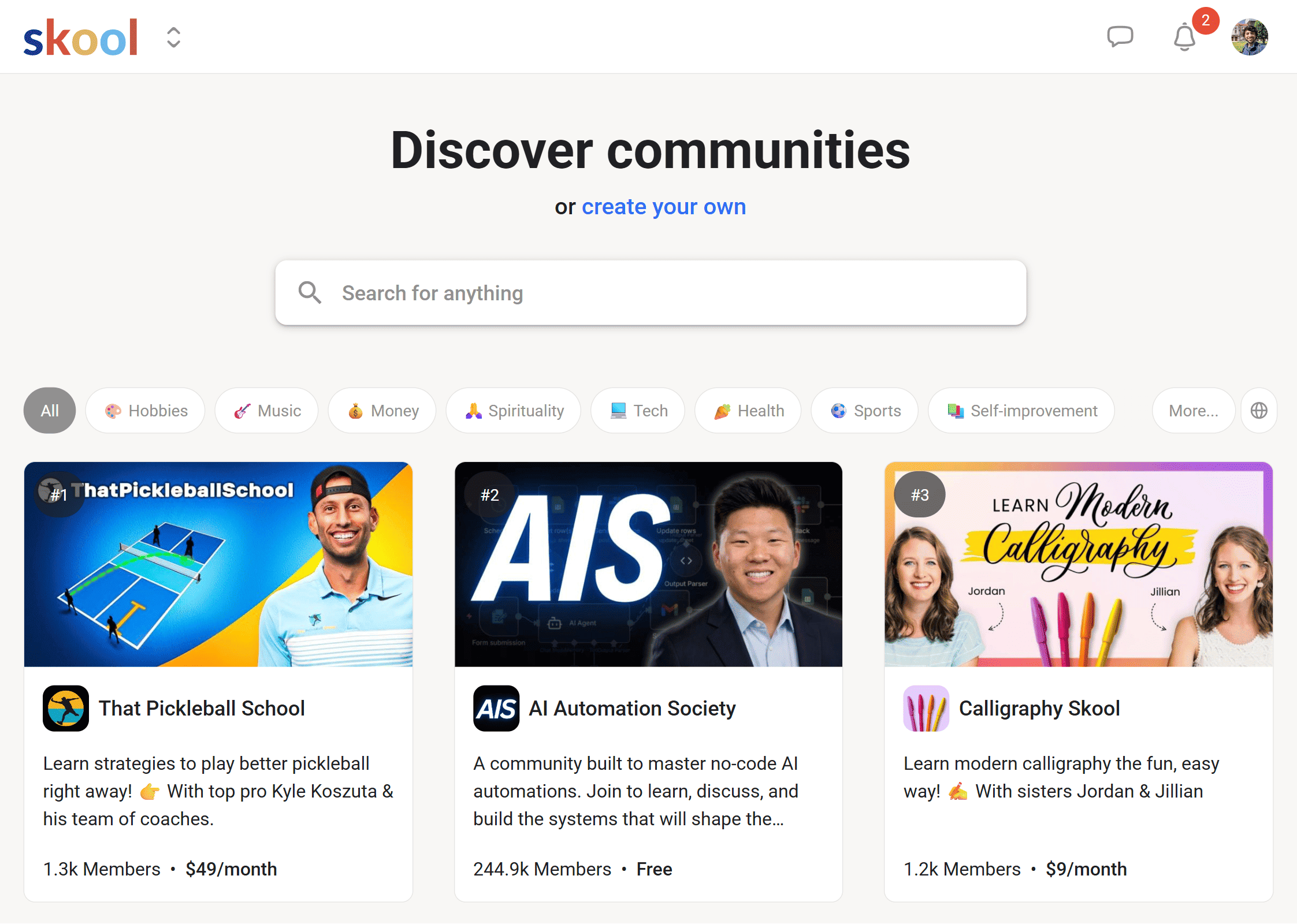
Skool is a private, owned community platform that combines:
- Discussion
- Education
- Gamification
- Paid memberships
All in one environment.
No external groups.
No patchwork of tools.
No algorithmic interference.
Members log in intentionally because they want access — not because something appeared in a feed.
Why Intentional Traffic Is More Valuable Than Viral Traffic?
The Economic Shift Skool Enables
Traditional content models rely on:
- Ads
- Sponsorships
- One-off launches
These are volatile.
Skool enables a different equation:
- Monthly recurring revenue
- Predictable cash flow
- Compounding value per member
One engaged member inside a Skool community is often worth more than thousands of passive followers.
What We Observed in Practice
Across multiple creator-led projects, a consistent pattern emerges:
-
Public audiences spike fast but decay within weeks
-
Paid communities grow slower but stabilize after 60–90 days
-
After month three, retention becomes the primary growth lever
Once a community reaches critical mass, revenue depends less on constant new traffic and more on engagement and expansion.
Why Stability Beats Scale?
Why Engagement Works Differently on Skool
Most communities fail because participation is optional and invisible.
Skool fixes this structurally.
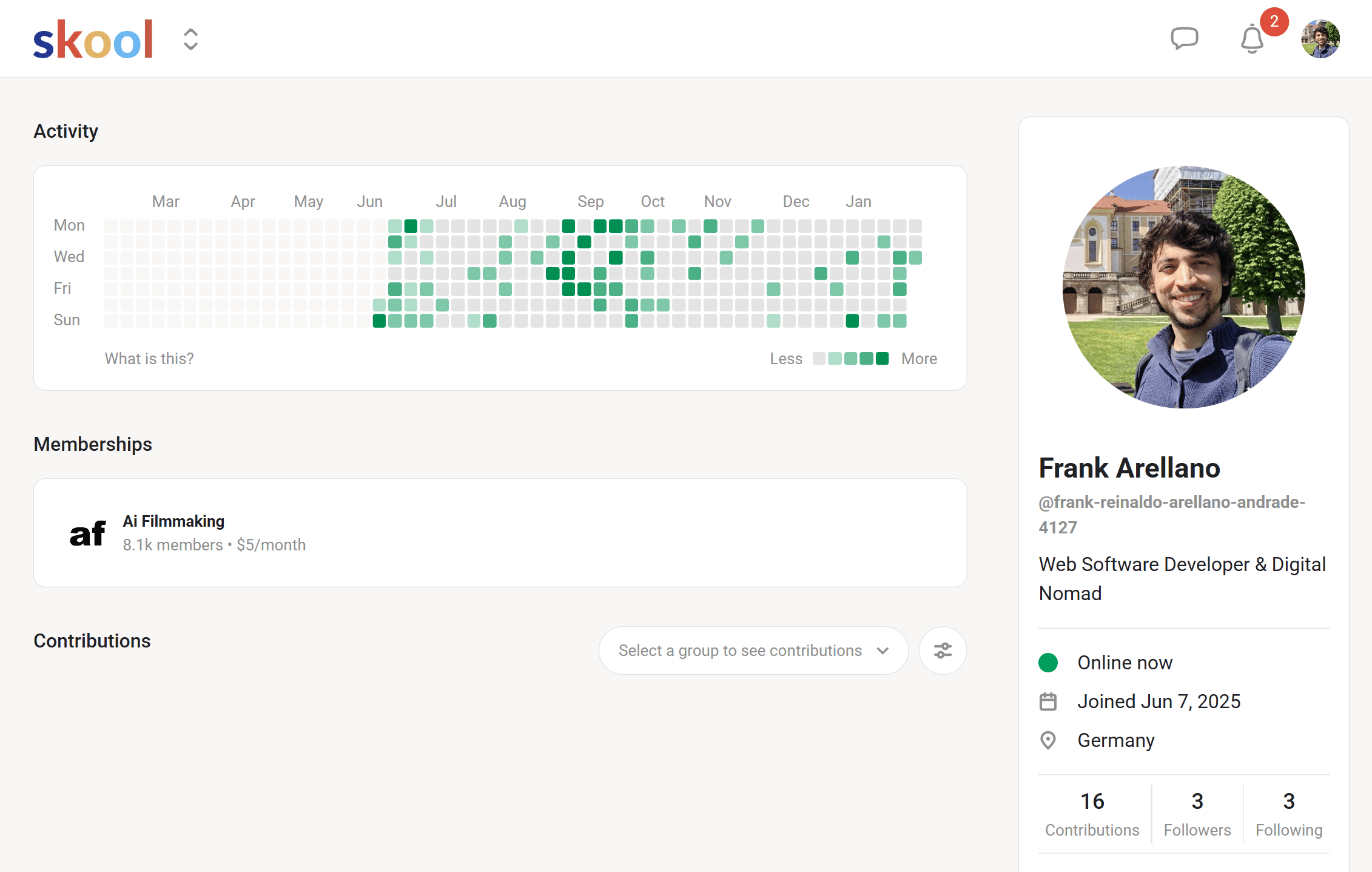
Its built-in system rewards:
- Posting
- Helping others
- Consistency
With:
- Points
- Levels
- Leaderboards
This creates social gravity.
People don’t want to lurk — they want to progress.
Why Behavior Changes When Progress Is Visible?
Courses That Don’t Die After Week One
Most online courses fail for one simple reason:
They isolate the learner.
Skool integrates learning directly into the community.
- Lessons trigger discussion
- Questions are shared publicly
- Wins reinforce motivation
Learning becomes a shared process, not a lonely one.
Why Accountability Is the Missing Ingredient?
Monetization Without Manipulation
Selling inside social platforms often feels forced.
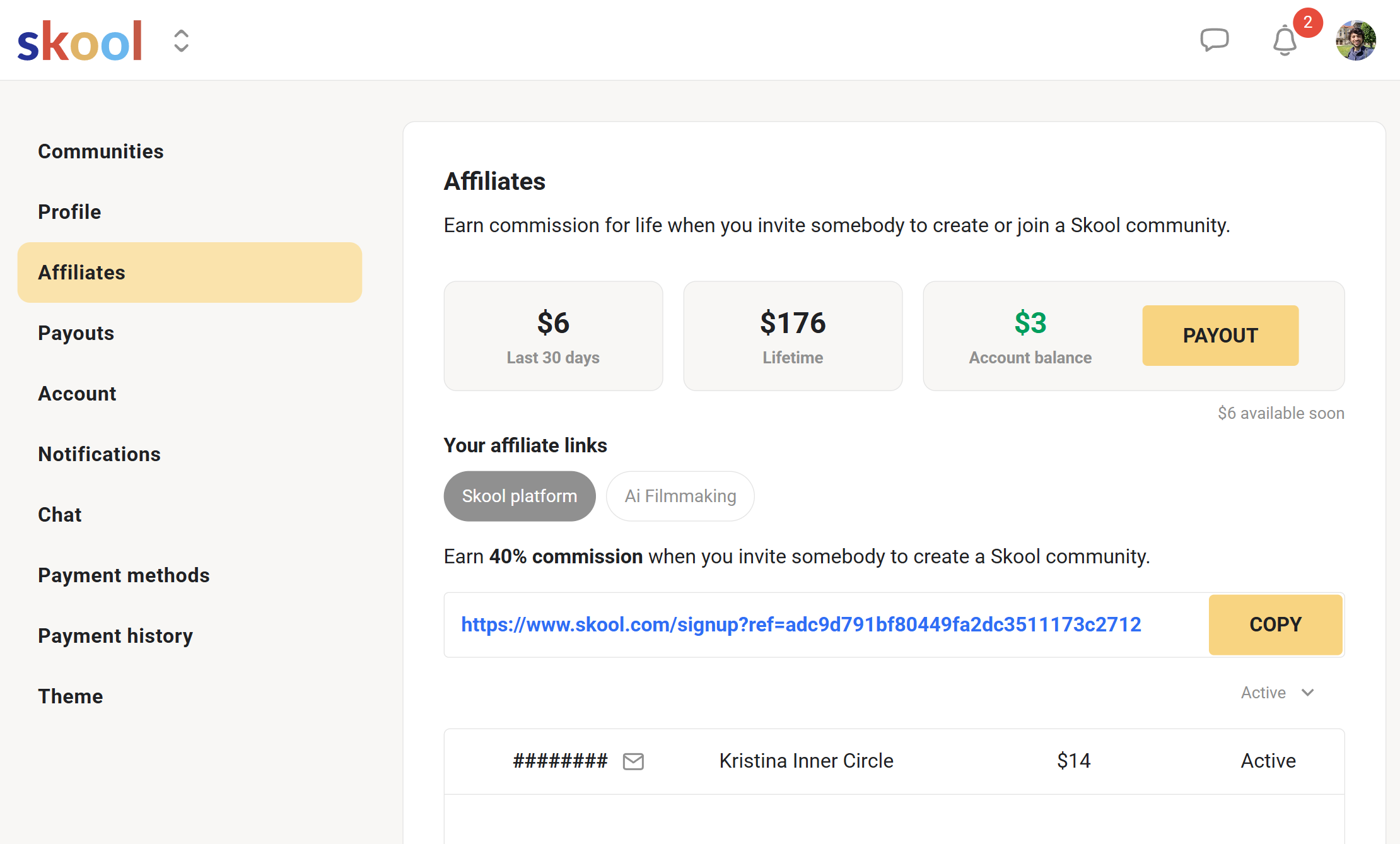
On Skool, monetization is structural:
- Access is paid
- Value is ongoing
- The exchange is clear
You are not “pitching”.
You are curating a space worth belonging to.
Why People Pay to Belong, Not to Be Pitched?
When a Community Model Fails
A community-based business will not work if:
-
There is no clear problem being solved
-
The creator is absent or inconsistent
-
Content exists without guided progression
-
Members cannot see outcomes or progress
Community is not passive income.
It is structured leverage.
Who Skool Is Actually For
It works especially well for:
- Creators with niche audiences
- Coaches and consultants
- Educators and experts
- Founders building authority
If trust, transformation, and retention matter to your business, community becomes a strategic advantage.
The Strategic Advantage
A Skool community becomes:
- Your warmest traffic source
- Your best feedback loop
- Your strongest conversion engine
It turns attention into an asset you control.
Attention Is Temporary. Ownership Is Strategic.
Final Perspective
If your business depends on platforms you don’t own, you don’t have a business — you have exposure.
Skool is not about growth hacks.
It’s about building something that still works next year.
If you want to move from borrowed attention to owned infrastructure, community platforms like Skool make this model easier to implement.
Borrowed Attention Fades. Owned Communities Endure.
Use the PLEXOSOFT coupon at checkout and enjoy 20% off any product or service on our site.
Further Reading On This Topic
The following articles are part of the same content cluster and expand on concepts referenced above:





Comments (0)